
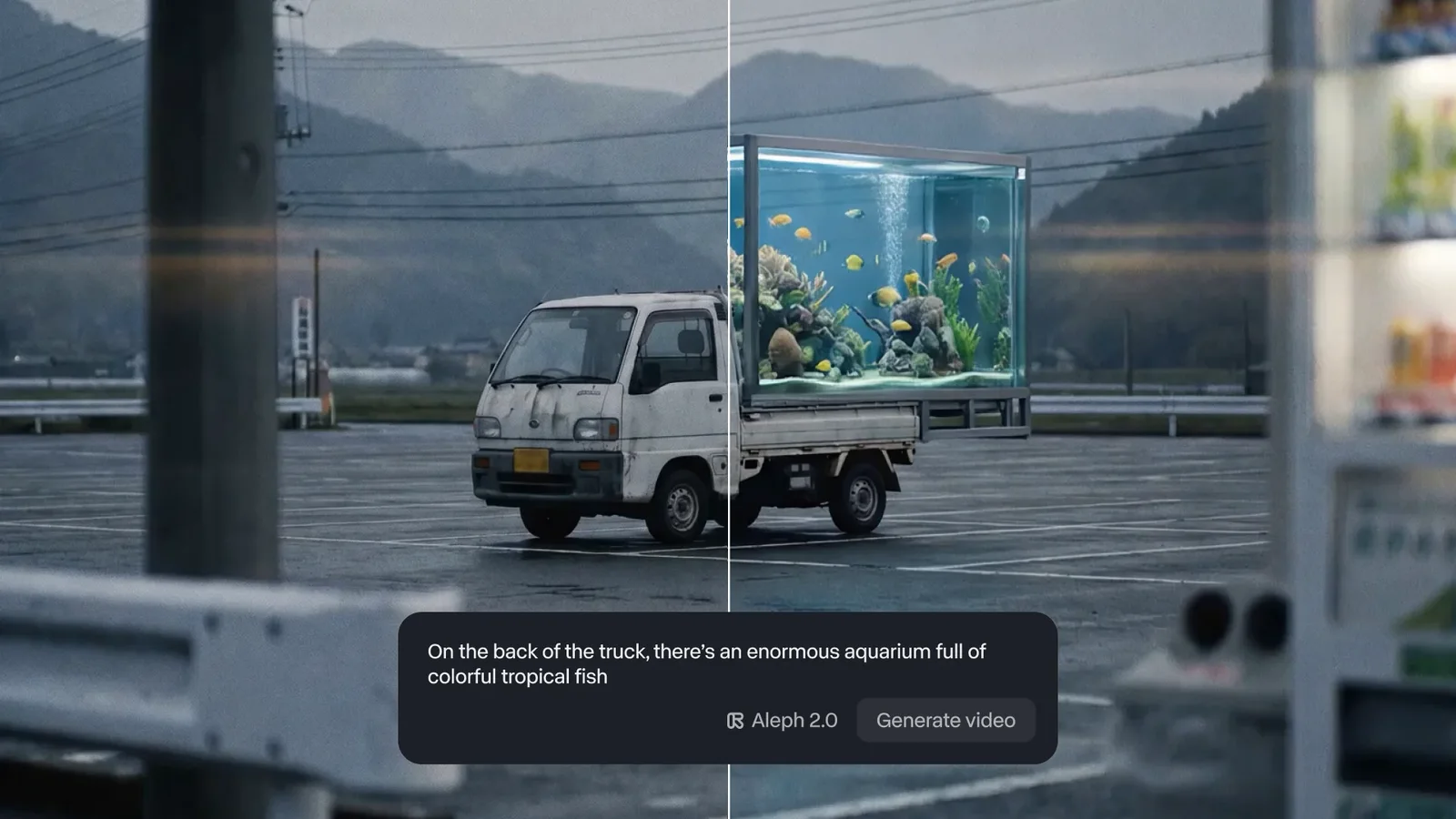
Runway's official Aleph 2 and Edit Studio announcement emphasizes localized change: replace an object, alter an environment, adjust lighting or modify a character while preserving unselected regions. It supports inputs up to 30 seconds at 1080p inside an interface for iterative instruction and preview.
That is closer to a production problem than another jump in first-generation appeal. A serial drama does not lack one attractive candidate; it discovers on shot eighteen that wardrobe color, a prop or performance timing is wrong. If the only option is full regeneration, approved detail disappears with the defect.
Local editing still needs reproducible testing
Preserving the rest of the frame is a product goal, not a guarantee for every input. Occlusion, reflection, rapid motion, long hair, hand contact and changing light can spread a local defect across the frame. Tests need a stable shot set covering static characters, two-person interaction, complex backgrounds, action and audiovisual sync—not only successful demos.
Every edit should retain the source hash, selected region, instruction, model version, wait time, spend, acceptance decision and manual post work. Local repair becomes a production route only when its total cost stays below traditional rework or full regeneration.
Production agents orchestrate work; they do not own taste
Runway's Agent release organizes ideation, storyboards, video and audio through conversation. It may reduce the operating cost of multi-step tools; it can also reproduce a bad creative judgment across more shots faster.
Teams should use agents for reversible orchestration: create versions, call tools, produce candidates and summarize feedback. Named owners still sign off performance, narrative information, shot selection and delivery. A mature production agent does not replace directing; it gives each decision context, versions and an exit path.
Aleph 2 matters less for twenty extra seconds than for giving producers a chance to turn AI video from candidate roulette into measurable revision.