
Bangkok produced more than three isolated headlines
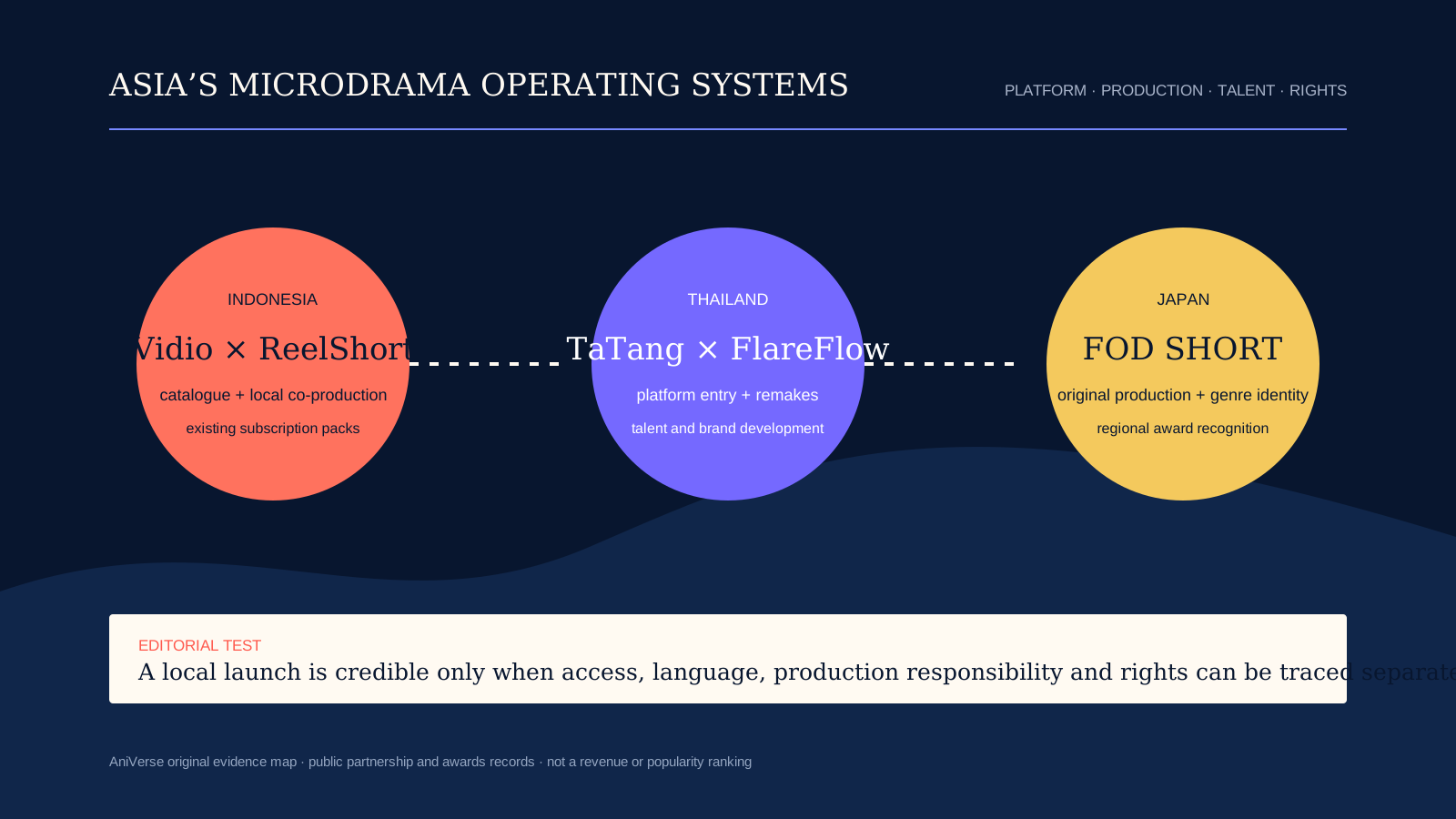
In the final week of August, ContentAsia LIVE and the ContentAsia Awards in Bangkok produced several connected records. Vidio announced an Indonesian-language ReelShort catalog inside existing subscription packages and discussed co-production with local companies and talent. CP Group's TaTang by TrueID in Thailand plans a FlareFlow entry alongside remakes and talent initiatives. The microdrama category at the ContentAsia Awards placed Singaporean, Japanese and Korean-language global-app titles inside one peer-juried frame.
Read as company news, these are licensing, platform, remake and award stories. Read across the industry chain, they answer a harder question: how international microdrama supply enters local accounts, payment, language, production and cultural relationships. Earlier expansion narratives emphasized translating, dubbing and marketing an already successful title into more territories. These arrangements move the question of who decides locally ahead of the content's arrival.
The public record remains incomplete. The Vidio partnership discloses no commercial terms or post-launch data; the Thailand arrangement has no confirmed remake count; the awards provide no viewing or market sample. This is an analysis of organizational direction, not a verdict on business success.
A local platform contributes a relationship system, not merely traffic
When ReelShort content enters Vidio's existing membership, Vidio supplies accounts, payment, recommendation, television access and local brand recognition. The international supplier lowers entry friction while accepting another product's categorization, visibility, data and pricing logic. Compared with acquiring users for a standalone app, this is an exchange of control over the audience relationship rather than a purchase of traffic.
The TaTang arrangement makes the shift more explicit. Platform entry moves alongside local remakes, talent development and brand projects, suggesting the service does not intend to remain a shelf. It wants the supply chain to generate more local versions and projects. If that system works, the shared assets will include adaptation knowledge, performer networks, dubbing terminology, marketing material, audience feedback and reusable production standards—not only finished episodes.
This is why one catalog cannot transfer without loss. An Indonesian subscription service may measure package use and return; a new Thai entry may first need to establish category awareness; a Japanese vertical service may build identity through originals. All three carry microdrama while purchasing different audience jobs.
Originals and remakes create different learning speeds
Remakes begin with a known structure and some market evidence, allowing local teams to learn vertical rhythm, episode architecture and delivery quickly. Their risk is treating relationships as a replaceable shell and changing only location and cast. A serious remake re-examines family, romance, class, religion, work and legal assumptions and gives local writers authority to change the conflict mechanism.
Originals begin with local people and platform design. FOD SHORT's The Missing Train offers one example: confined train space, horror-suspense and a seventy-episode structure jointly produce a product identity. Originals carry higher uncertainty but can create proprietary genre and talent memory. An award does not prove audience choice; it makes those creative decisions discoverable to regional peers.
A mature service can operate both speeds: licensed catalog and remakes establish supply quickly, while originals create distinctiveness. The management problem is whether rights and data return to a learning system. When remake knowledge remains with a vendor and original data remains inside the platform, every next season begins again.
Localization can remain polished packaging rather than shifted authority
The words local talent and co-production do not automatically establish local authority over commissioning, editing, characters, data or derivatives. Brand funding may enable development or make the story answer to marketing from the beginning. Industry reporting must continue to ask who approves the script, owns the master, chooses the released version, sees the data and can make another season.
A local platform may also treat short drama as a temporary category supplement: acquire a large opening catalog and add a tab without sustained editorial programming, recommendation, community or originals. Launch volume is visible, but if refresh stops, the entry is buried or viewing never informs renewal, the local operating system is only a temporary hub.
Localization should therefore be measured by responsibility and feedback rather than language count: whether local teams can change the story, distributors receive title-level data, rights support revision and sequel, and talent receives credit and continued opportunity.
A real expansion checklist starts with four ownership questions
First, who owns access and discovery data? Second, who owns story, characters, master and local adaptation? Third, who carries local production, review, labor and delivery? Fourth, who can use release results to commission the next cycle? Each question belongs separately on the partnership map; the phrase joint operation cannot conceal them.
A producer entering a market should deliver chain of title, a localizable script package, character and terminology records, textless masters and split audio, project production records, marketing assets and explicit elements that cannot change. The platform should disclose channel identity, target user, device, subscription or unlock logic, data return, recommendation resources, QC and revision route.
International reach is not a larger set of flags. A market becomes durable when it leaves reusable knowledge, rights and teams. Completing a language version produces more files; completing responsibility and feedback produces the next title.