
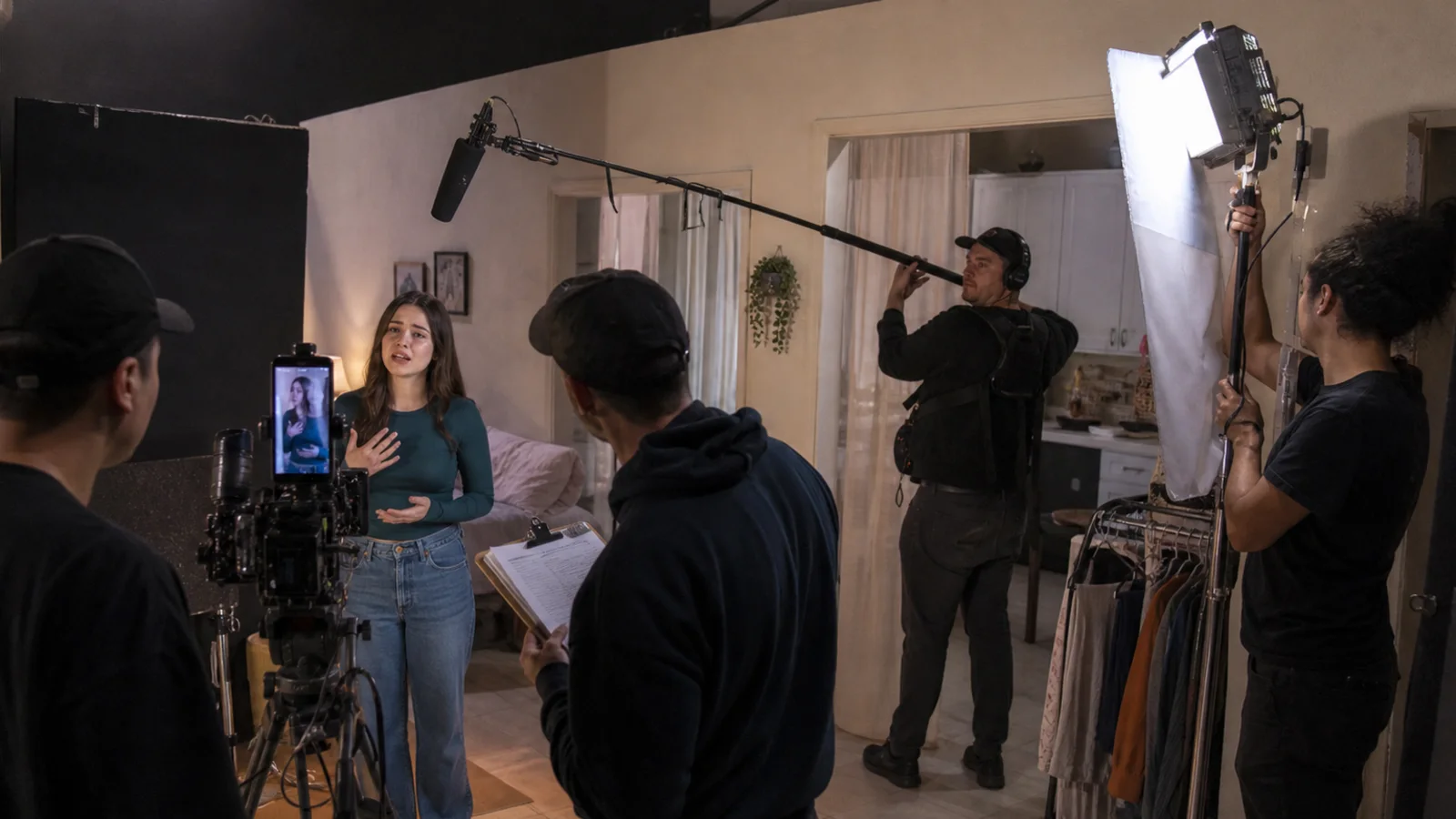
SAG-AFTRA confirmed that Knockout Shorts signed a Verticals Agreement and that CandyJar has produced union-signatory vertical titles. The union describes a contract tailored to the budgets, format and pace of serialized mobile microdrama while reminding members that Global Rule One still applies.
The evidence establishes a professional route, not the budgets, schedules, compensation or success of every title. A dedicated agreement adapts negotiation to the format; it does not suspend the underlying fact that performers are workers whose labor and likeness may be used across many episodes and versions.
Short episodes do not create short labor
A one-minute episode can require a full day of rehearsal, waiting, makeup, blocking, pickups and promotion, while one performance may be split across episode endings, trailers, advertisements and localized versions. Production records need call periods, scenes, changes, stunts, intimacy, nights, marketing units and later use—not only final runtime.
This also makes cost honest. More shots per day may reduce location days while increasing lock pressure, overtime, performance failures and post repair. Sustainable efficiency counts complete labor and rework per approved minute rather than removing unpaid or invisible time from the ledger.
Role classification determines who is seen and who is undervalued
Vertical series rely on many characters who appear briefly but trigger identity revelations or season-long secrets. Classification should consider narrative function, total scenes, dialogue, arc, safety requirements, promotional use and renewal—not merely seconds on screen.
Accurate cast and role metadata also support search, reporting, dubbing, rights tracking and future seasons. Removing supporting performers from the record may simplify a spreadsheet while creating later legal and operational ambiguity.
AI terms are already a versioning issue
Microdrama routinely creates dubbed languages, lip adjustments, covers, acquisition creative and character accounts. Performer consent must therefore distinguish ordinary post, digital doubles, voice replication, machine translation, lip editing, generative pickup and training, with purpose, retention, reuse and withdrawal terms.
Clear boundaries do not prevent tools; they make authorized localization and repair faster. Generating first and seeking consent later becomes expensive once assets have entered advertisements and overseas platforms. A performance-rights ledger is production infrastructure.
High hook density cannot depend on high harm density
Revenge, confinement, coercive romance, crashes and physical conflict create rapid hooks, but a short scene still involves real contact, repetition and psychological pressure. Compressed preparation can concentrate rather than reduce risk.
Scripts need flagged action, intimacy, minors, closed-set scope and stop mechanisms. Platforms should ask for safety and rights records alongside technical masters. Industrial maturity means designing intensity and protection together.
Set efficiency comes from earlier decisions
Vertical production can be efficient because framing, locations and recurring scene types support reusable methods. It should not become efficient by postponing script, coverage and use decisions until the set. A dedicated agreement helps force role, scope and use into preproduction.
Daily plans need story and shooting order, emotional position, continuity, risk and minimum coverage, plus explicit stop conditions when sound, focus, performance or safety repeatedly fail. Finishing the day with unusable material is not efficiency.
Contracts change catalog value
Catalog value is not only genre, episode count and runtime. A title with reachable performers, clear sequel and promotion scope, authorized language use, logged generative changes and accountable parties is easier to localize and operate over time.
Distribution diligence should cover full credits, agreement status, performance and voice use, music and underlying IP, marketing assets, AI processing, minors and high-risk scenes. Recording labor also allows experience to accumulate across projects instead of disappearing from the catalog.
The next test is whether work actually improves
Future reporting should not stop at the count of signatories. The test is timely pay, workable hours and safety, understandable version use, dispute resolution and production that maintains both budget and quality. The union announcement supplies a route; project and worker evidence will show whether it functions.
AniVerse reads this as a shift from temporary projects toward an industry relationship. A durable format needs contracts that assign responsibility, protect labor and support the next collaboration—not only apps, models and traffic.
Standards must enter the budget before the set
Budgets need explicit resources for agreements, rehearsal, intimacy and stunt coordination, minors, overtime and rest, transport, continuity, AI and language consent, promotion and pickups. A zero budget for standards turns every set promise into personal sacrifice.
Daily reports, later version use and post-project review should connect actual hours, changes, incidents, rework, complaints, pickups and rehiring. The economic value of a professional contract appears in fewer hidden costs and a team willing and able to return for the next season.
What performers, producers, platforms and audiences should each receive
Performers need understandable scope, safety, pay, promotion, language, voice and generative use; producers need executable pathways and templates adapted to concentrated episodic work; platforms need traceable rights, credits, versions and accountable contacts.
Audiences do not see the contract, but they experience its consequences in performance, continuity and a team able to return. Labor standards are not outside the work; they enter the screen through the conditions under which the work was made.
A dedicated verticals agreement translates speed, short episodes and many versions into negotiable production conditions. Producers should move role classification, scope, safety, credits, voice and likeness, AI processing and overseas versions into preproduction, while buyers make labor and rights records part of catalog diligence.