
WEBTOON Entertainment and Warner Bros. Animation announced at Web Summit Vancouver that The Wolf & Red Riding Hood, Vampire Family, Sable Curse and Snow and Briar are in animation development as part of a broader slate. The announcement confirms development, not completed production, release dates or distribution platforms.
The four titles are linked less by genre than by clear relationships, sustainable worlds and visualizable action. A family comedy can create episode payoffs through an ensemble; dark fantasy and mystery rely on long reveals; romance advances through consequential choices. For short-drama producers, this is more useful than hunting a ‘hottest IP’: adaptability comes from story mechanisms that can be serialized.
Reader data enters development but cannot replace adaptation judgment
WEBTOON brings chapter reading, comments and payment behavior into development before screen production. That can identify audience response to characters, turns and relationship arcs; it cannot establish whether animated shots, performance, sound and rhythm work. Time spent on a panel does not convert directly into vertical-shot duration.
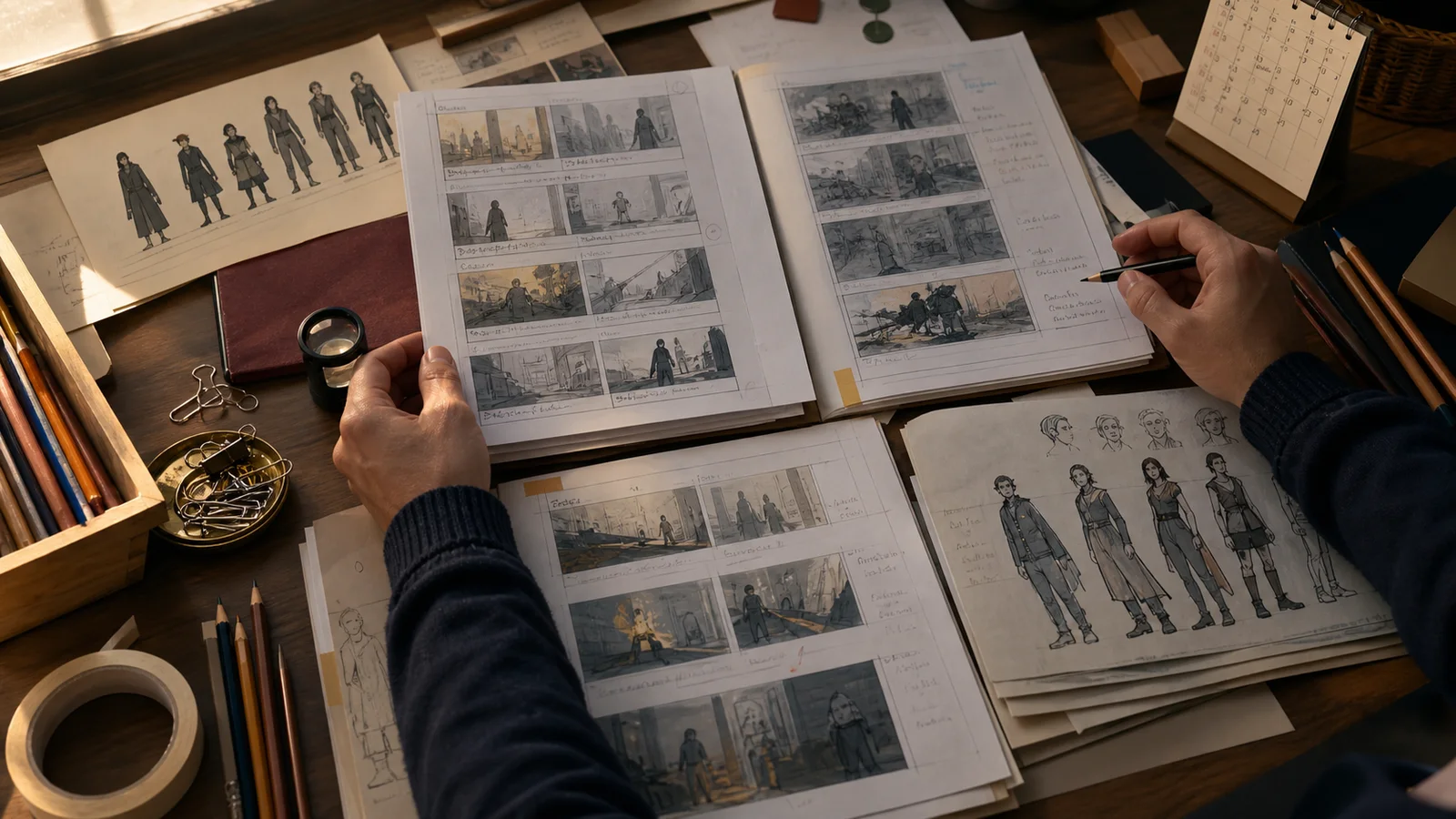
Adaptation needs two evidence tracks: retain source chapters and reader response while testing audiovisual interpretation through boards, animatics and small samples. Fidelity to a popular moment does not require line-by-line replication; meaningful fidelity preserves why a character's choice matters.
The financial context shows why IP inventory is not immediate revenue
WEBTOON's first-quarter revenue was slightly lower year over year and close to flat at constant currency, while adjusted EBITDA improved and the company retained substantial cash. These results do not judge the four projects; they show that a public company balances growth, margin and development cycles simultaneously.
Animation development can span years, with creative changes, platform negotiations and shifting priority. AniVerse therefore records the slate as in development, excludes it from released-title catalogs and avoids ‘coming soon.’ The useful evidence to track is staffing, production stage, distribution partner and the first public material.
Webcomic IP value does not come only from an existing audience; it comes from translating relationships and world rules into sustainable production and a reusable cross-media slate.