
Put four totals back with their own denominators
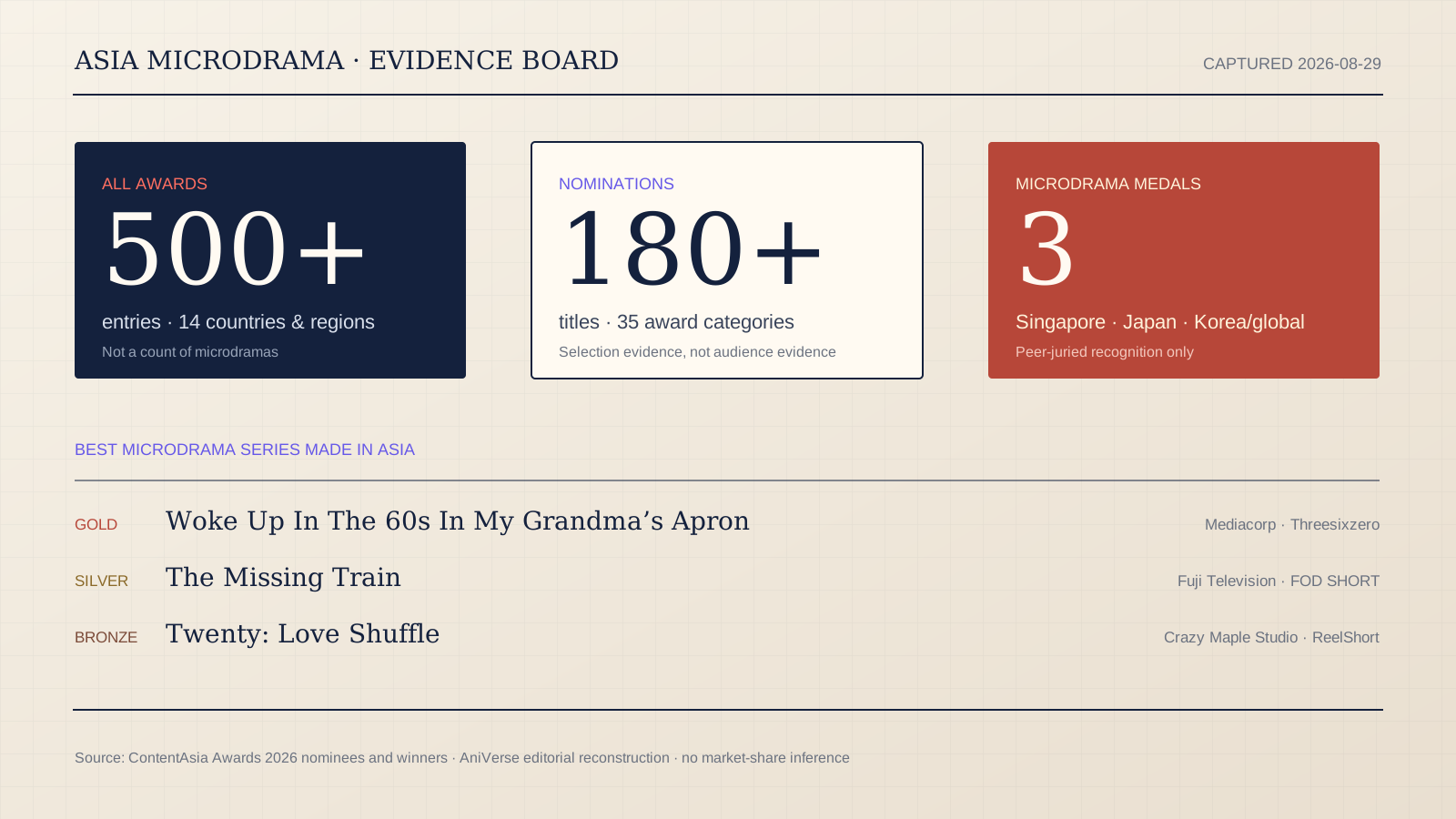
Fuji Television's release and ContentAsia's lists say the full 2026 awards program received more than 500 entries from fourteen countries and regions, with over 180 nominated titles across thirty-five categories. In Best Microdrama Series Made in Asia, Singapore's Mediacorp and Threesixzero won gold for Woke Up In The 60s In My Grandma's Apron, Japan's Fuji Television took silver with The Missing Train, and Crazy Maple Studio's Korean-language Twenty: Love Shuffle received bronze.
The totals 500, 14, 180 and 35 cannot be placed in one funnel to calculate a microdrama conversion rate because they cover the entire television and content awards program. The available microdrama sample consists of the public nominees and three medals in that category. The pages provide no count of all submitted microdramas, budgets, viewing, territorial distribution or judging scores.
The visible pattern is supply route, not national strength
The organizations behind the three medalists differ: a Singaporean public-commercial media production system, a Japanese broadcaster developing an original for its own vertical service, and a global app carrying a Korean-language production. One creative category therefore contains several routes rather than one platform or production template.
That variation is useful for commissioning and partnerships. A team can examine ownership of underlying work and master, local production responsibility, first window and cross-border versions. It cannot extrapolate medals into national output, revenue, users or overall quality. An award is a peer selection, not a census of the market.
The next dataset needs title fields, not a larger headline total
To turn the awards into a learnable dataset, the next step is title-level capture of territory, producer, platform, language, episode count, genre, release state, underlying work, official page and international versions, each with an observation date. Comparable fields can reveal recurring production routes.
Viewing, revenue, completion and audience structure should remain empty without aligned sources. A blank cell is more professional than converting medals, page placement or publisher promotion into popularity.