
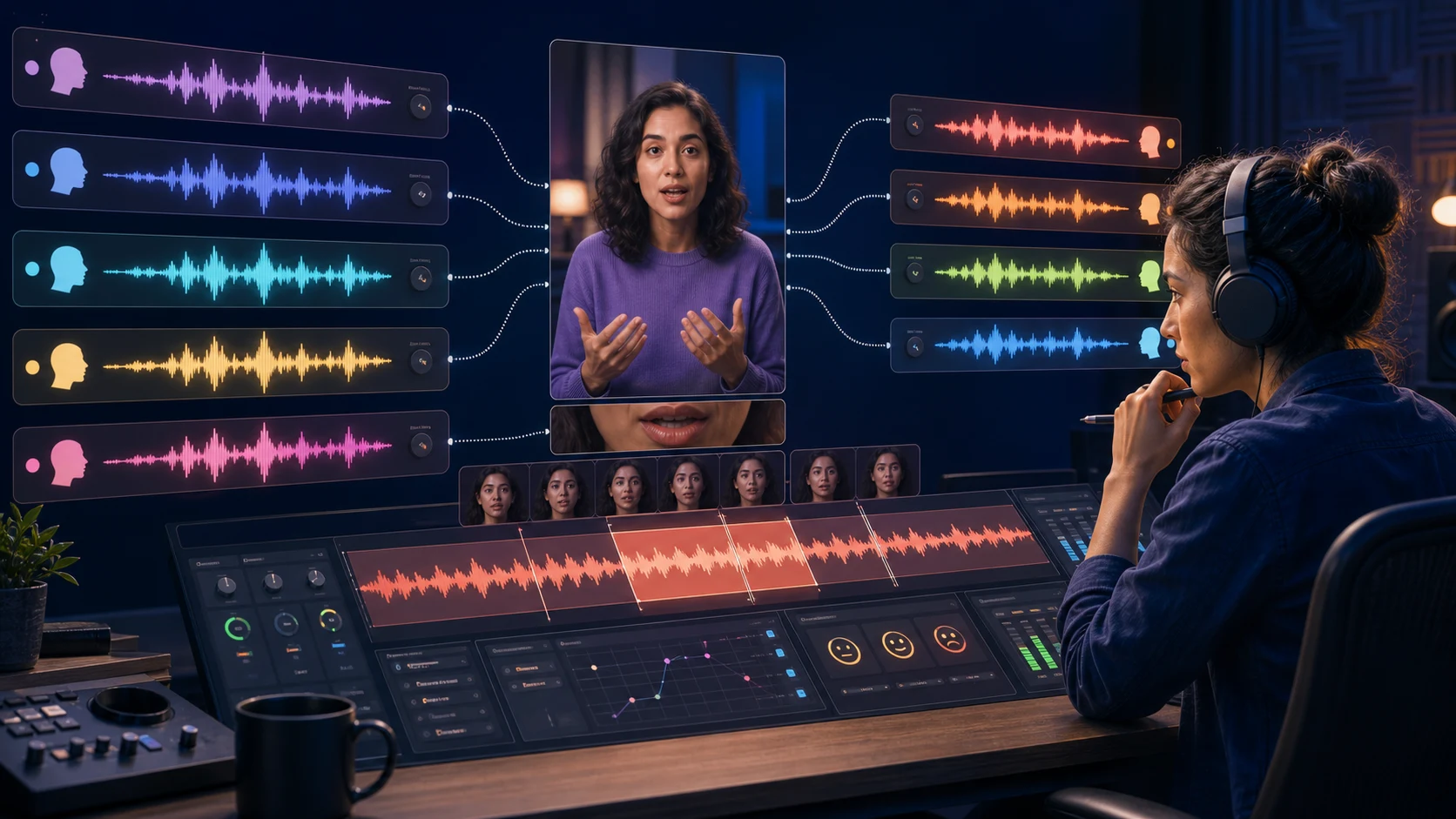
YouTube's expansion of auto dubbing to all channels, together with language preferences, expressive speech, automatic filtering and a lip-sync pilot, turns multilingual distribution from a specialist-studio capability into a channel feature. The threshold falls, but errors can now scale across a catalog: one name, relationship or emotional mistake can spread through several languages and older videos.
REPORTED
Language selection moves to channels and viewers
YouTube says auto dubbing is available to all channels, alongside language preferences, expressive speech and automatic filtering, with lip sync still a pilot direction.
Together these features broaden channel language coverage and can expose viewers to different tracks through preferences. Exact functionality, language support and output state still need channel-level verification.
ANALYSIS
The existing catalog enters a new quality risk
Channel-level automation affects more than the next upload. When older titles gain new tracks, names, relationships and worldbuilding terms can diverge across eras and translations. Producers need catalog-wide glossaries and voice bibles before bulk processing.
High-risk material includes legal or medical meaning, identity terms, complex relationships, wordplay, emotional reversals and dialogue dependent on visible mouth movement. It can be grammatically correct and still narratively wrong.
FIELD NOTE
Build a risk-based channel review
Low-risk titles can sample openings, turns, endings and all names; medium-risk titles add native-language listening; high-risk titles retain human translation, voice work or line-level approval. Every review records language, product state, issue and regeneration decision.
Channels should also monitor viewer corrections, audio switching, negative feedback and completion differences, feeding findings back into the glossary instead of treating each comment as an isolated complaint.
Evidence boundary: The product update describes capabilities, not independent error rates on short-drama material. A convincing demo cannot become a catalog-wide quality conclusion without fixed samples and native-language review.