
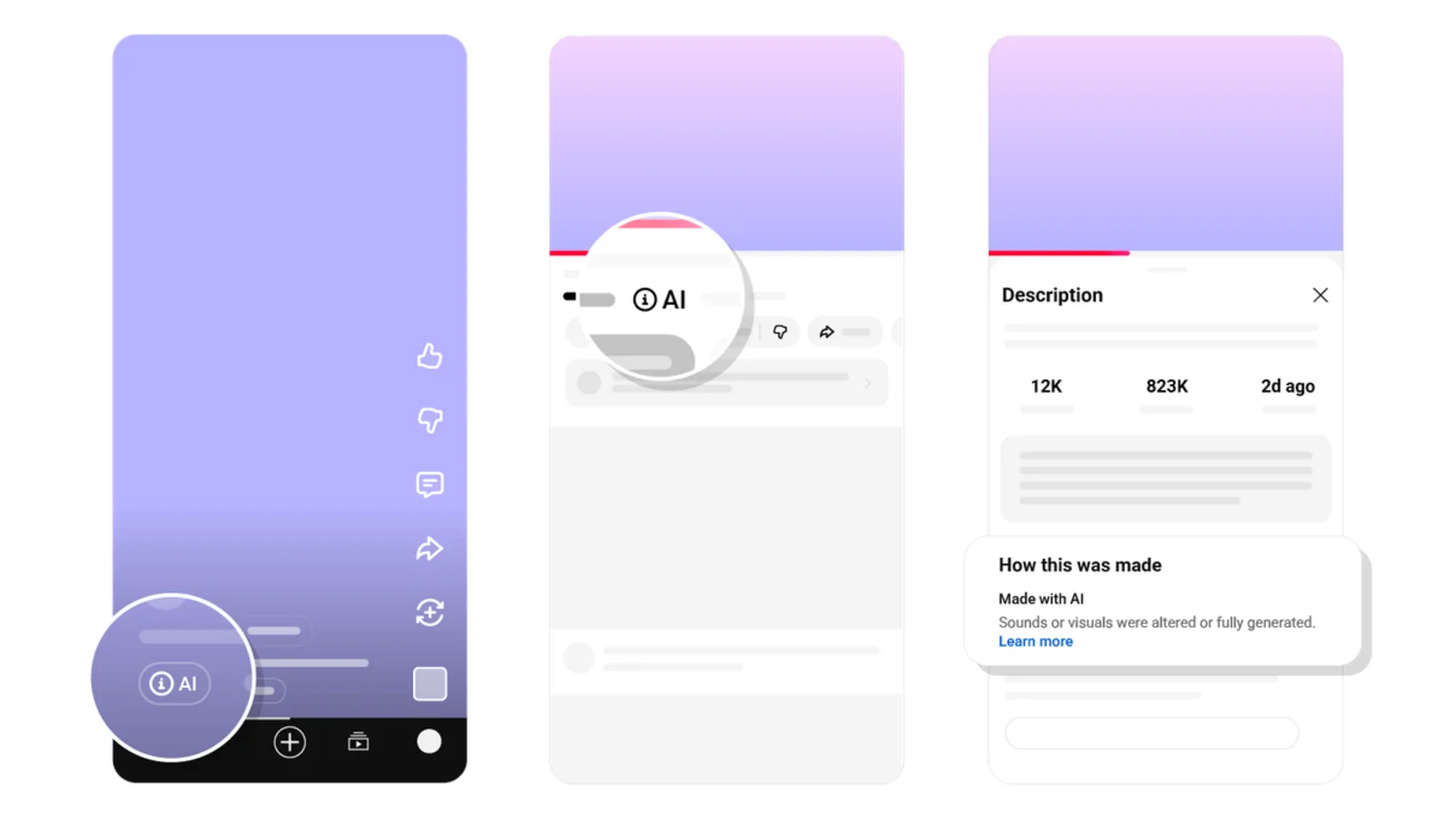
YouTube no longer relies only on an uploader checkbox for AI-content labels. Since May 2026, its own tools, content credentials and detection mechanisms can trigger a ‘How this content was made’ label. For short-drama teams, production history is becoming a content fact the distribution platform can cross-check.
READER BRIEF
What this story helps you decide
As platforms begin automatic detection, AI disclosure no longer rests only on creator self-reporting. This story turns shot origin, likeness and voice consent, version differences and platform responses into an explainable production ledger.
ANIVERSE THESIS
The common mistake is treating disclosure as end-card copy. The actual governance object is the origin relationship among shots, audio, characters and every release version. A team can explain a platform mismatch only when declarations align with the asset ledger.
01 · REPORTED
Labels enter the viewing surface as detection begins
YouTube says labels appear below long-form players and over Shorts, while creators can update some automatically applied labels.
It also identifies cases where labels may remain permanent, including use of YouTube generative tools or fully generative content credentials. YouTube says the label alone does not change recommendation or monetization.
02 · ANALYSIS
Animation still needs shot-level judgment
Obviously unrealistic animation and minor post work do not all require the same disclosure, but one short drama can mix real voices, character replacement, generated environments and news-like footage. One vague title-level label loses the meaningful differences.
A stronger method records captured, licensed, fully generated, partially generated, cloned-audio and manual-post origins so each shot resolves to the production chain.
03 · FIELD NOTE
Retain disclosure receipts per release version
Trailers, Shorts, episodes and compilations can use different artwork, audio, generated shares and context. Each asset needs a master hash, credential, declaration decision and platform response.
When the platform and producer disagree, review the asset and declaration first instead of assuming the label is a reach penalty.
COUNTERPOINT · LIMITS & UNKNOWNS
What this reporting cannot prove
YouTube has not disclosed its full detection model, false-positive rate or every content boundary. An automatic label does not mean a violation and does not predict reach or revenue; each title still requires review of its imagery, territory and platform receipt.
WATCH NEXT · WHAT TO MONITOR
Do not stop at today's conclusion
Track YouTube's title-level receipts for automatic labels, credentials, updates and appeals, retaining false-positive and correction cases by version. A label is not itself a violation and cannot replace title-level rights review.
Once platforms detect automatically, AI disclosure becomes auditable production and distribution data rather than one line of copy.