
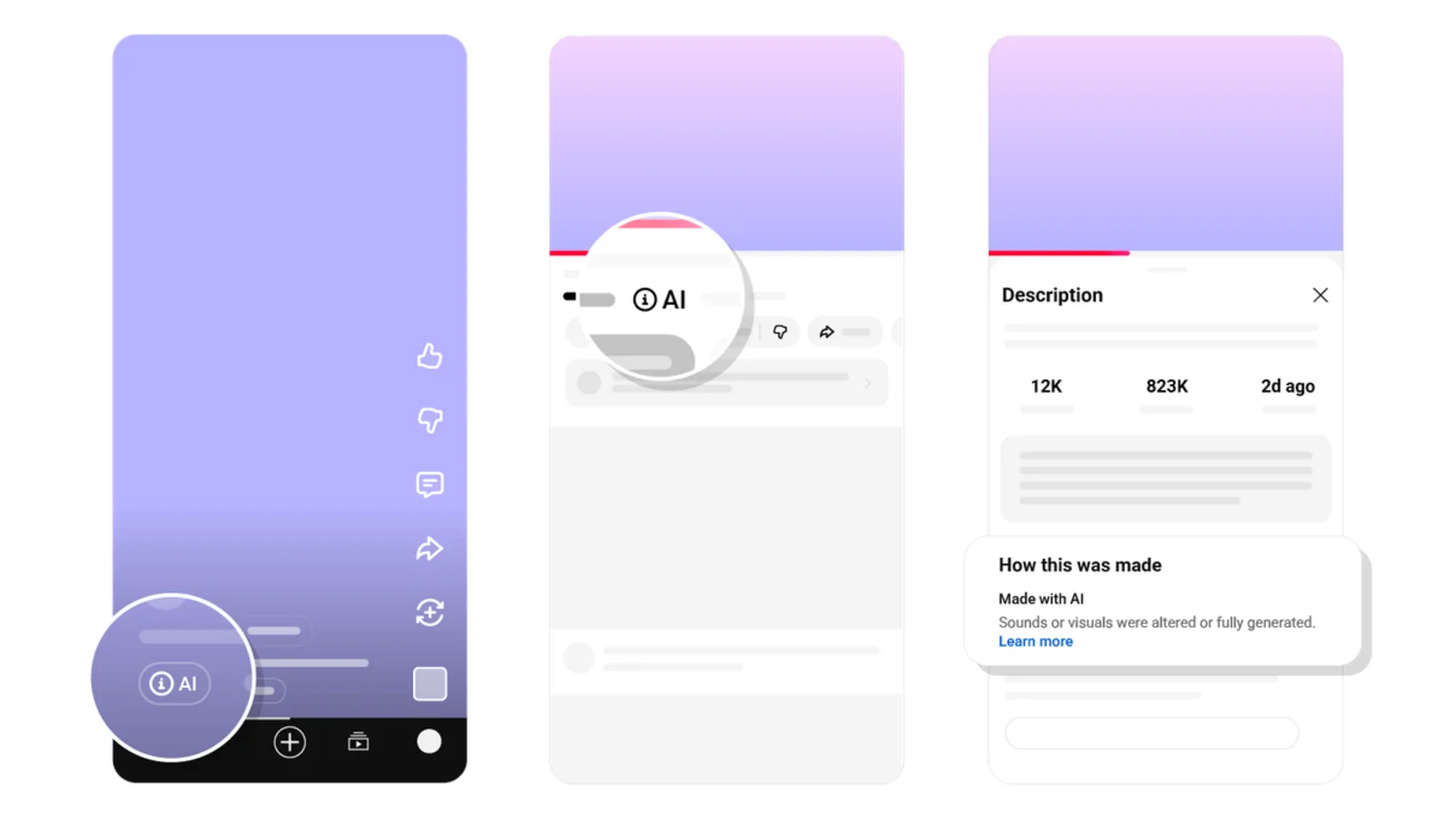
The question shifts from whether to label to how the platform knows
YouTube's May update makes ‘How this content was made’ more prominent: below long-form players and directly over Shorts. It also says automatic detection is operating. Content made with YouTube's own generative tools, carrying fully generative C2PA information or detected as requiring disclosure may receive a platform-applied label.
YouTube says the label alone does not change recommendation or monetization. That does not remove operational risk. Misleading disclosure, unclear rights and unexplained asset origin can still trigger broader policy, copyright and partner review.
Animation does not eliminate the need for production evidence
YouTube focuses disclosure on realistic synthetic content; obviously unrealistic animation, effects and minor beautification do not all sit in the same mandatory category. Yet short dramas often mix live-action reference, face replacement, real-person voices, news-like scenes, generated environments and platform tools. ‘It is animation’ cannot describe every shot.
AniVerse recommends a shot-level origin ledger distinguishing captured footage, licensed stock, in-house 3D, fully generated material, partial generation, voice cloning and post repair. The goal is not to satisfy one label but to reconstruct the facts during distribution, insurance, brand review or dispute.
Treat provenance as a deliverable, not a slogan
C2PA can carry information about creation and modification, but it does not automatically prove truth, complete rights or perfect disclosure. Platform detection and credentials establish only part of the origin chain. Producers still need job IDs, input permissions, model versions, edit projects, voice consent and final-master hashes.
Version consistency matters just as much. A story cut into trailer, Short, episode and compilation may change its generated share, artwork, audio and context. Every release asset needs its own disclosure decision and review receipt; one blanket ‘made with AI’ notice cannot replace the differences.