
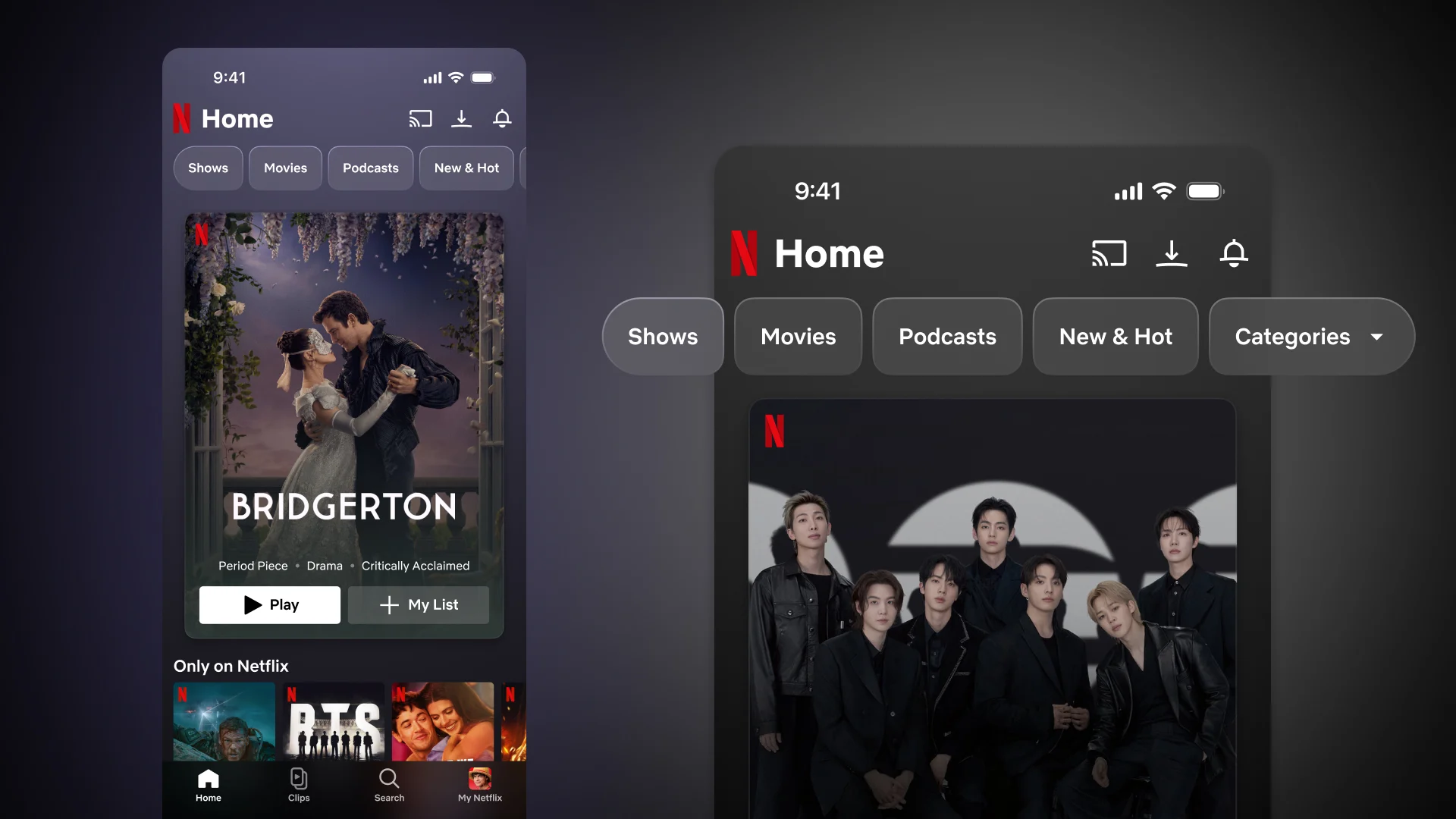
Netflix is placing Clips inside mobile not to turn the service into a short-video feed, but to address one of the catalog's most expensive problems: how viewers decide what to watch next in seconds when faced with many titles.
READER BRIEF
What this story helps you decide
This story turns Netflix Clips from product news into a catalog-conversion problem: which excerpts help viewers understand a work, enter the full title and return.
ANIVERSE THESIS
For short-drama teams, the useful lesson is not the vertical interface but the conversion job: save, share or enter the full title. Evaluation needs to move from clip views toward whether the promise is fulfilled by the work.
01 · REPORTED
Clips has entered Netflix mobile across several markets
Netflix says Clips surfaces personalized excerpts from films, series and specials with actions to save, share or enter full content.
The feature launched across the U.S., U.K., Canada, India, Malaysia, the Philippines and other markets, then expanded to Korea, France, Germany, Brazil and Mexico. The announcement discloses no conversion or viewing lift.
02 · ANALYSIS
Vertical discovery and vertical originals are different products
Clips draws from an existing catalog to aid selection; episodic short-drama apps must deliver narrative, retention and monetization. They share mobile attention but cannot be judged by one metric set.
If an excerpt strips away character relationships, genre promise or a clear path to the work, it can create a pause without an effective viewing session. The clip must explain what story the viewer is entering.
03 · FIELD NOTE
Treat each clip as a testable catalog entrance
Prepare character-, conflict-, world- and emotion-led excerpts for the same title, then track exposure, saving, full-title entry, first-session duration and seven-day return.
Retain results by territory, language and surface. Without them, the feature's launch is confirmed but growth is not.
COUNTERPOINT · LIMITS & UNKNOWNS
What this reporting cannot prove
Netflix publishes no Clips click-through, completion, title conversion or revenue effect. This story does not turn launch into audience validation or infer that Netflix will produce vertical short-drama originals.
WATCH NEXT · WHAT TO MONITOR
Do not stop at today's conclusion
Track territory rollout, saving and full-title entry, then measure full-title conversion and seven-day return by excerpt type in owned projects. Netflix has not published conversion rates.
Vertical video is not a conclusion about content type; it is a catalog discovery and conversion entrance that needs redesign.