
01 · VERIFIED FACT
The verified core fact
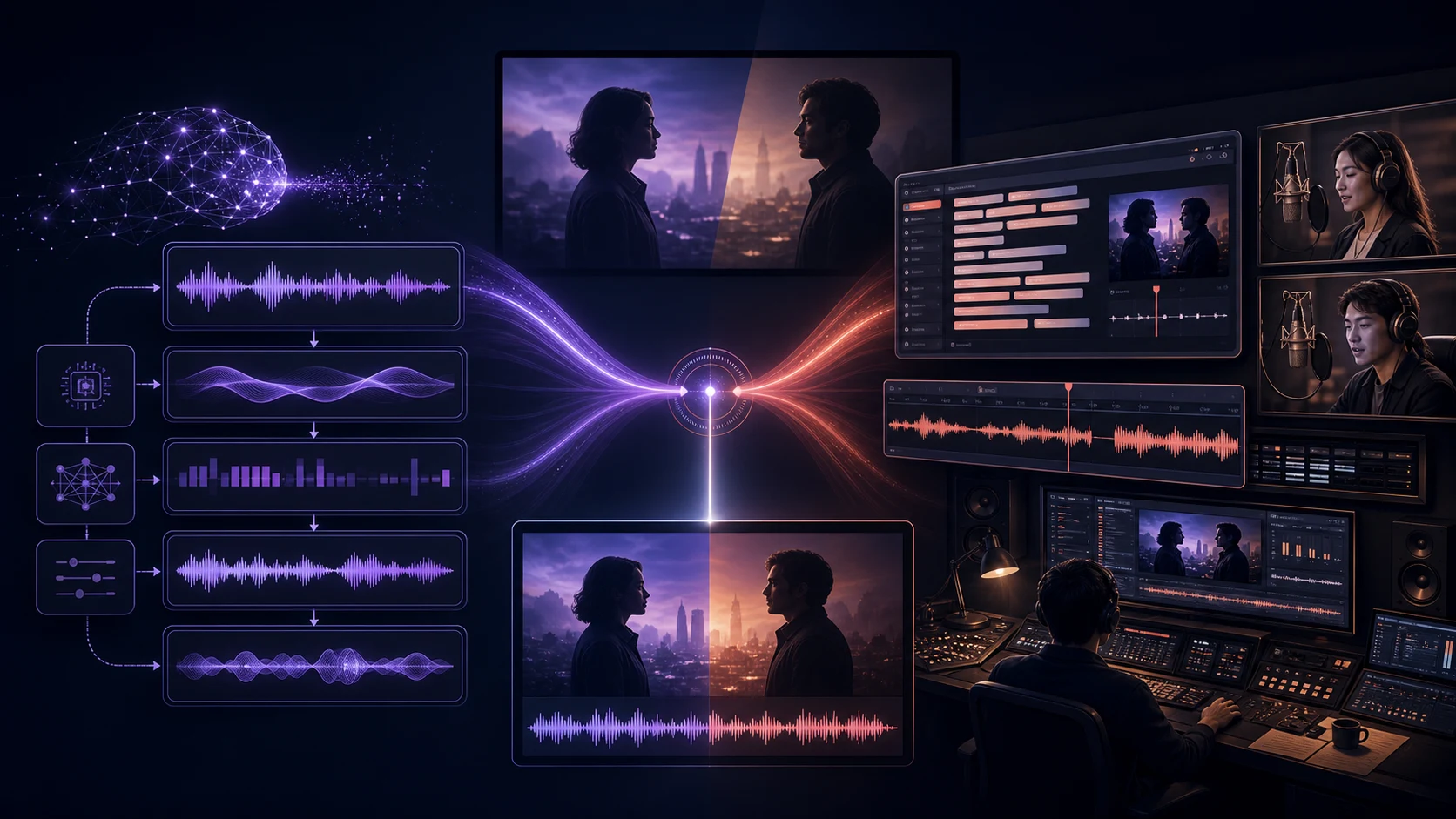
Official documentation describes Dubbing v2 as an automated alpha path, while clip-level editing, regeneration and track exports remain in the legacy Dubbing Studio, now in maintenance mode. Producers should decide first whether manual segment control is required.
This page supports the finding “ElevenLabs currently separates automatic dubbing from its editable dubbing workflow.” The finding uses only the currently public information in the sources below and is recorded under methodology v1.0.0.
02 · EDITORIAL READ
Why this matters to the industry
This signal affects how creative control enters a real production pipeline, including shot state, character assets, audio, localization and human revision. Before adoption, teams need to confirm traceable inputs, recoverable intermediate state and stable outputs for downstream editing and delivery.
03 · ACTION CHECK
Production and operations checklist
- 01
Place the capability within development, storyboard, generation, audio, edit or mastering.
- 02
Check whether project state can be saved, recovered and handed off, and identify human-editable controls.
- 03
Validate continuous shots and a complete delivery package rather than a single image or one successful generation.
EVIDENCE BOUNDARY
Evidence boundary
Verified means the source, time and fields passed publication gates. It is not an independent guarantee of product performance, commercial return or future policy. Official statements establish public capabilities and rules; cross-platform comparisons, market size and outcome claims still require consistent samples and independent data.